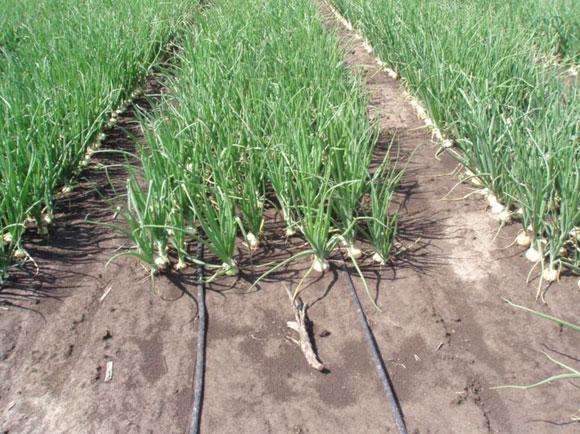
Onion farming is now done under drip irrigation in Kenya. High Quality drip irrigation Kits for Onion farming in Kenya are KES 130,000 – KES 180,000 at Faulu Irrigation LTD. We help farmers get reliable irrigation solutions to maximize high quality crop production.
Call 0717120401
Introduction to Onion Farming in Kenya
Onion farming in Kenya is done on large scale in areas such as Kieni, Meru, Karatina, Naivasha and Emali. Growing onions is one of the most profitable ventures in Kenya due to high onion demand in rural and urban markets. According to Food and Agriculture Organization(FAO), Kenya’s Onion Yield does not meet the demand. Most of the Onion flooding the market is imported from Tanzania. This means that farmers can take advantage of the high demand and venture into onion farming.
Onion Varieties Grown in Kenya
The variety of onion you choose to grow determines the yield and return on investment. Hybrid varieties are popular due to high yield, large bulbs, uniform growth and disease resistance. Hybrid Onion varieties in Kenya include; Neptune F1, Red Creole, Red Pinnoy, Red Bombay and Jamba F1.
- Red Creole – matures faster and withstands drought.
- Neptune F1 – Yields high and have a long shelf life of 6 months.
- Red Coach F1 – fast maturity of 80 days. Deep red bulbs with high market demand.
- Bombay Red – highly adaptable and high local market demand.
Why Onion Farming is Popular in Kenya
Onions, especially bulb onions is the main spice used for preparing many dishes in Kenya. They often have high demand in the market throughout the year. Onion yield high and attract high market price ranging from KES 60 – KES 180 per Kg compared to other plants.
Bulb onions have a long shelf life and can remain in good condition under proper storage.
Onion Farming Growing Conditions
- Temperature 15°C and 25°C
- Well drained Soil with PH of 6.0 – 6.8
- Altitude ranging from 550 – 1200 m above sea level.
- Onions require consistent but regulated moisture which is mainly done by irrigation.
Onion Seedlings Propagation
You can propagate onion seedlings in traditional soil beds or seedling trays. Propagation in Seedling trays is the best method to grow onion seedlings. In seedling trays, you use cocopeat or peat moss, approved due to it’s sterile and excellent moisture retention.
Use the steps below to start seedlings in trays:
- Prepare a mixture of cocopeat, compost manure and soil. Mix in the ratio of 25:35:40
- Fill the seedling tray cells with cocopeat mixture.
- Sow the onion seedlings 2 cm deep on the cells.
- Water the trays gently and place it in a shade house or protected greenhouse.
Steps for Onion Farming in Kenya
Bulb onion farming under irrigation under irrigation is done on raised beds. Land preparation for onion farming under irrigation is by the steps below:
- Deep Ploughing – first clear the land, cultivate and break the soil loose.
- Incorporate Compost manure – you can pour manure on the soil to boost fertility.
- Preparing planting beds – raised beds spaced 30 cm apart. The beds often take 100m long and 1 m wide.
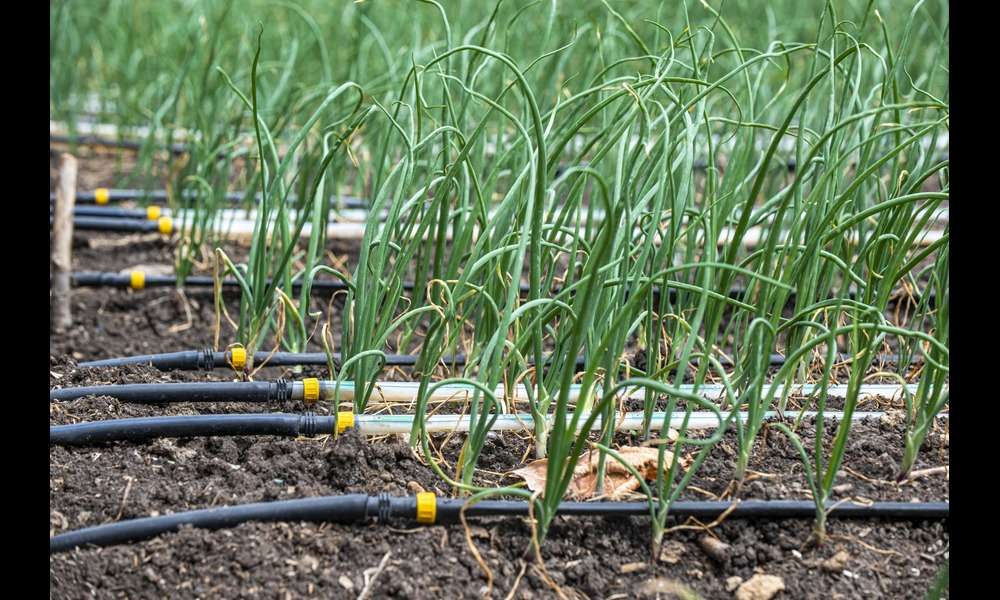
- Install the drip irrigation kit – set up and install drip irrigation system. Use a 20 cm dripline as it is ideal for onions. Onion beds should take 3 or 4 lines per bed.
- Transplant Onion seedlings – when transplanting, ensure the seedling comes with its own intact soil.
- Water the transplanted onions – after transplant, water thoroughly to prevent transplant shock.
Onion Irrigation Kit | Drip Irrigation System for Onion Farming
Onion farming under irrigation requires controlled and uniform watering achievable through drip irrigation system.
The drip irrigation method supplies consistent, steady and sufficient water to each onion plant.
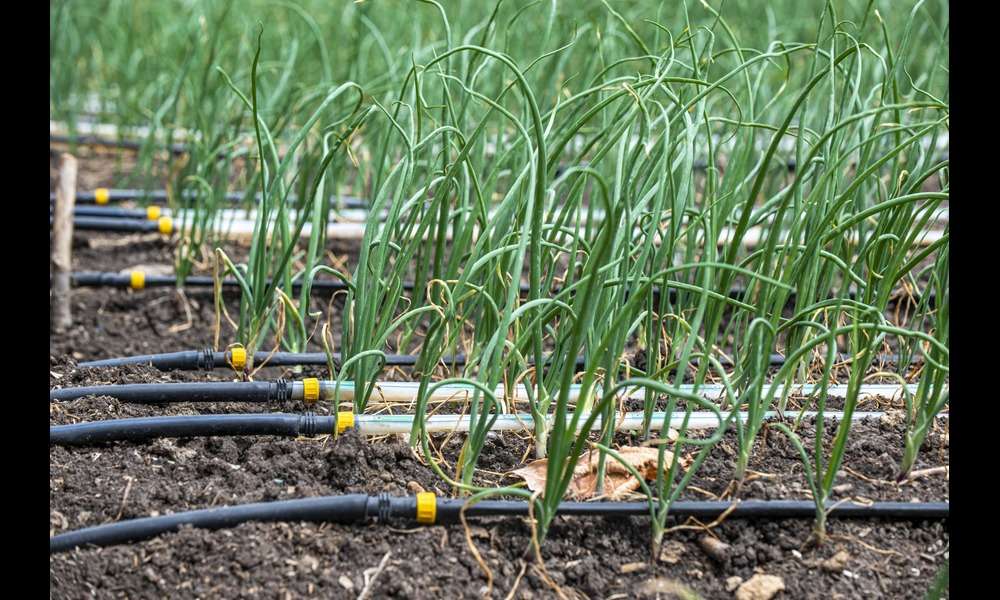
Onion drip irrigation System complete Kit
An onion drip irrigation system comes with:
- HDPE Pipes – required for mainline and sub-mainline water supply.
- HDPE pipe fittings – connect the Hdpe pipes.
- 16mm Dripline – ideal for dripping effect on the onion plant lines.
- Ball Valve – for water control in the system
- Drip Connectors – for connection of driplines to the system.
- Fertigation Kit – optional but essential for fertilizer supply.
- Tank connector – for connection of water tank with HDPE pipes.
Cost of Onion Drip Irrigation System
A 1 acre onion drip irrigation system is between KES 135,000 – KES 185,000. Cost breakdown is shown below as per the number of lines per bed.
1 dripline per bed – KES 130,000
2 driplines per bed – KES 160,000
3 driplines per bed – KES 180,000
Weed Management
Weeds are a common challenge in onion farming. Weeding can be done with mulching using dry leaves or grass.
Pest Management
Pest and disease lower yield in onion farms. Common diseases include downy mildew, onion rust and purple blotch.
Purple Blotch
This fungal disease causes purple lesions on leaves, eventually leading to leaf drying and reduced bulb size.
Downy Mildew
Downy mildew thrives in cool, humid conditions and appears as pale patches followed by fungal growth.
Onion Rust
Rust produces orange pustules on leaves, weakening plants and reducing yields.
Tips for high Yield in Onion farming
- Plant certified disease-free seed.
- Rotate crops with cereals or legumes.
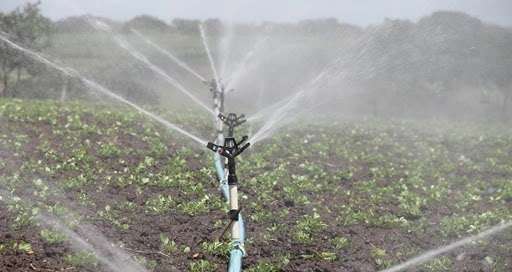
- Avoid overhead irrigation where possible.
- Improve air circulation through proper spacing.
- Remove infected crop residues after harvest.
How to Harvest Onions
Harvest onions when 80% of the leaves dry. This indicates that bulbs have are fully mature.
Harvesting too early reduces bulb size and storage life, while delayed harvesting increases the risk of diseases and sprouting.
Steps for harvesting onions
- Loosen the soil carefully.
- Pull bulbs gently without bruising them.
- Leave onions in the field for several days if weather permits.
- Protect harvested bulbs from direct rainfall.
Proper handling minimizes mechanical damage that could shorten storage life.
Curing and Storage of Onions
After harvesting, onions should be cured before storage. Curing involves drying the bulbs in a shaded, well-ventilated area for about 10–14 days until the necks are completely dry.
Store cured onions in mesh bags or ventilated crates inside a cool, dry store with good air circulation. Avoid stacking bags too high because poor ventilation encourages rotting.
Practical Tips for Success in Onion Farming
- Test your soil before every planting season.
- Use certified, high-quality seed.
- Install drip irrigation where possible.
- Monitor pests and diseases weekly.
- Apply fertilizers based on crop growth stages.
- Keep accurate farm records.
- Rotate onions with non-allium crops.
- Harvest only when bulbs are fully mature.
- Cure onions properly before storage.
- Monitor market prices before selling.
Profitability of Onion Farming in Kenya
Onion farming has high yield that can reach an average of 20 tonnes per acre. This translates to approximately KES 1.2 million to KES 3.4 million assuming you sell a kilo at a range of KES 160 – KES 170. Deducting the cost of drip Kit, seedlings, fertilizers and pesticides you can remain with a profit of KES 500,000 – KES 1.5 million.
Frequently Asked Questions (FAQs)
1. What Onion Varieties are grown in Kenya?
Red Coach F1, Neptune F1, Red Pinnoy, Red Creole and Bombay F1.
2. What are the ideal onion farming growing conditions?
- Well-drained sandy loam soils with a pH of 6.0–6.8 and
- temperatures between 15°C and 25°C.
3. How long do onions take to mature?
90–120 days depending on the variety grown.
4. Is drip irrigation necessary for onion farming?
It is not compulsory but essential for high yield.
5. What is the cost of an onion drip irrigation system?
KES 135,000 – KES 180,000.
6. Which dripline is best for Onions?
15 cm emitter spaced dripline.
7. How many kilograms of onions can an acre produce?
8,000 – 20,000 kilograms
8. Is onion farming profitable in Kenya?
Yes when proper irrigation and management, it has high yield.
9. How should onions be stored after harvest?
10–14 days.
10. Where Can I Buy Onion Drip Irrigation System in Kenya?
Faulu Irrigation LTD.
Leave a Reply