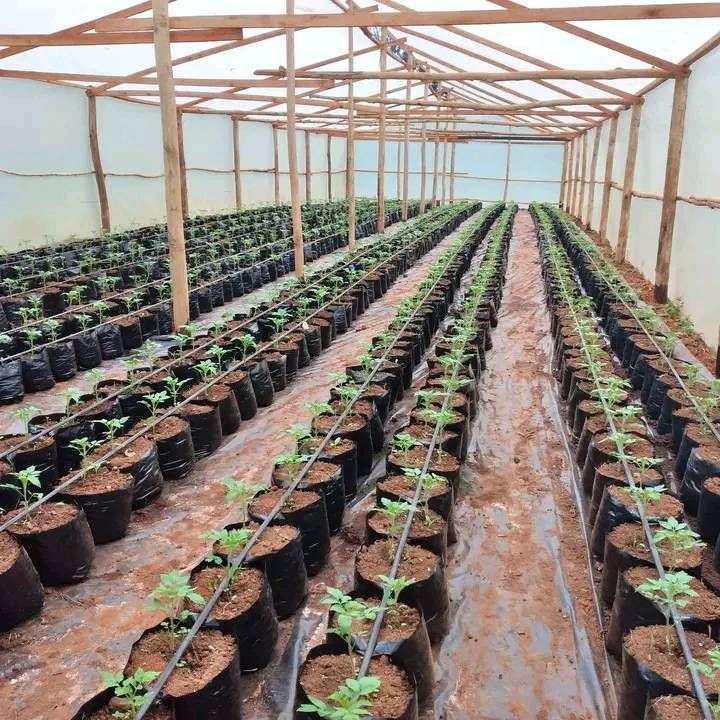
Greenhouse farming in Kenya is a high income agribusiness venture with over 85% Return on Investment. A greenhouse enhances control on moisture, temperature and humidity for faster growth and low pest or disease risk. Greenhouse farming is done on wooden or metallic greenhouse that cost between KES 150,000 – KES 1,000,000 or beyond. Ideal for growing capsicum, tomato, leafy greens, herbs, flowers, strawberry and other crops. Get a greenhouse from options including 8 x 15m, 8 x 24m, 8 x 30m, 16 x 30 m from Faulu Irrigation LTD.
Call 0717120401
Greenhouse Farming Cost in Kenya
The cost of greenhouse farming in Kenya can range from KES 250,000 for 8 x 15m to over KES 1,000,000 for 16 x 30 greenhouse. Farming in a wooden greenhouse is cheaper than in a metallic greenhouse. Wood is cheaper thus lowering the cost of greenhouse farming.
How Profitable is Greenhouse Farming in Kenya?
Greenhouse farming supports year round production, you can grow short season crops even in dry seasons. To determine how profitable a greenhouse is, we must consider the size, cost invested and type of crop planted. Let’s assume you are growing capsicum on a 8 x 15m wooden greenhouse. Since each capsicum plant yields 3 kg, total yield will be 1500kg worth KES 240,000 – KES 345,000 with a kilo selling at KES 160 – KES 230. Subtracting the cost of the wooden greenhouse, seedlings and pesticides, you remain with a profit of around KES 70,000 – KES 150,000. This means it can take around 1.5 years to recover the cost of investment.
Greenhouse Prices in Kenya
| Greenhouse Size | Plant Capacity | Wooden Greenhouse | Metallic Greenhouse |
| 8 x 15m | 500 | KES 150,000 | KES 230,000 |
| 8 x 24m | 750 | KES 210,000 | KES 275,000 |
| 8 x 30 m | 1000 | KES 280,000 | KES 350,000 |
| 16 x 24m | 1600 | KES 360,000 | KES 460,000 |
| 16 x 30m | 2000 | KES 410,000 | KES 580,000 |
Low-Cost Greenhouse Farming in Kenya
Various greenhouse sizes and designs enhance low cost greenhouse farming in Kenya. They include:
- 8 x 15 m wooden greenhouse
- 8 x 24 m wooden greenhouse
- 8 x 15 m shade house
- 8 x 24m shade house
- Custom shade house
Greenhouse Farming in Kenya: What You Should Learn Before Starting
- Requirements – these are the essentials for greenhouse farming. Includes land, reliable water source, sufficient capital and greenhouse construction materials.
- Cost – learn the cost of greenhouse that can produce the yield based on the market demand you have. Also factor in seedlings, fertilizers, pesticides, labour and water.
- Soil Suitability – you should test your soil health and PH to determine if it would be ideal for production. In case of diseases such as fusarium wilt, you need to buy soil and grow in bags.
- Market for your produce – you should first do proper research to understand which crops are marketable. Also learn the cost and management of every crop you consider venturing in.
- Greenhouse crop Management – greenhouse farming requires proper management to avoid losses. Nutrition, spray and irrigation should be at the right time and of appropriate amounts. You should follow a program from expert agronomists.
Greenhouse Construction Materials in Kenya
The essential requirements for building a greenhouse depends on whether it is a wooden or metallic structure.
Wooden Greenhouse
For wooden greenhouses you need:
- Wooden Poles – Vertical support poles and roofing poles.
- Greenhouse Polythene Sheet – covers the greenhouse structure and controls temperature.
- Nails – to hold the wooden poles intact.
- Insect net – covers the ventilation and allows temperature regulation.
- Channel Lock Profiles – allows reliable attachment of the greenhouse polythene sheet without tearing it.
- Wiggle wire – locks the greenhouse cover into the channel lock profile.
Metallic greenhouse
- Galvanized steel or painted metal Poles – vertical support structures
- Arch Steel pipes – for design of tunnel roof structure.
- Tapping Screws – holds the galvanized steel structure and arch steel roofing poles together.
- Greenhouse polythene – covers the entire structure for temperature control.
- Insect net – ventilation cover
- Cement, sand and ballast – to make concrete for firm support.
Other Requirements to Run a greenhouse
- Drip irrigation Kits
- Crop Support structures
- Seedling trays (optional)
- Water tank
- Misting Kit ( optional)
Greenhouse farming Recommended Crops
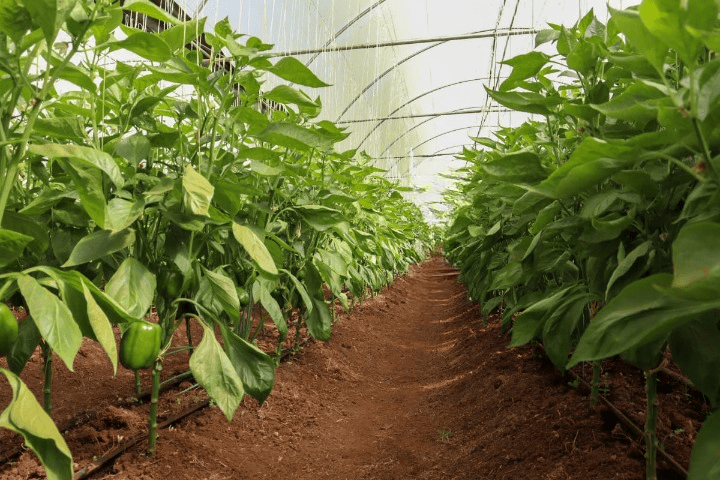
- Capsicum – varieties such as pasarella, admiral F1, commandant and Ilanga F1.
- Tomato – indeterminate tomato varieties such as Anna F1.
- Vegetables – kales, cabbage, lettuce, spinach, brocolli, managu and kunde.
- Fruits – strawberry, raspberries.
- Cucumbers
- Herbs – mint, cilantro, rosemary, thyme and parsley.
Greenhouse Construction By Faulu Irrigation LTD
We construct both wooden and metallic greenhouse at affordable charges. Our charges are not inclusive of water tanks, cost of transport and cost of labourers requested.
We often give you a quotation that breaks down all the requirements and total costs.
Call 0717120401.
Suitable Place to Construct a Greenhouse
- the area should have reliable water access.
- It should have proper sunlight access
- Well drained soil
- Proper Soil PH and Health
If the soil PH is low, you can use lime to boost the PH. Challenges such as infected soil requires use of grow bags and sterile growing media such as cocopeat.
Best Greenhouse Farming Practices in Kenya
Greenhouse farming is highly profitable when you implement the best greenhouse practices. Common practices include:
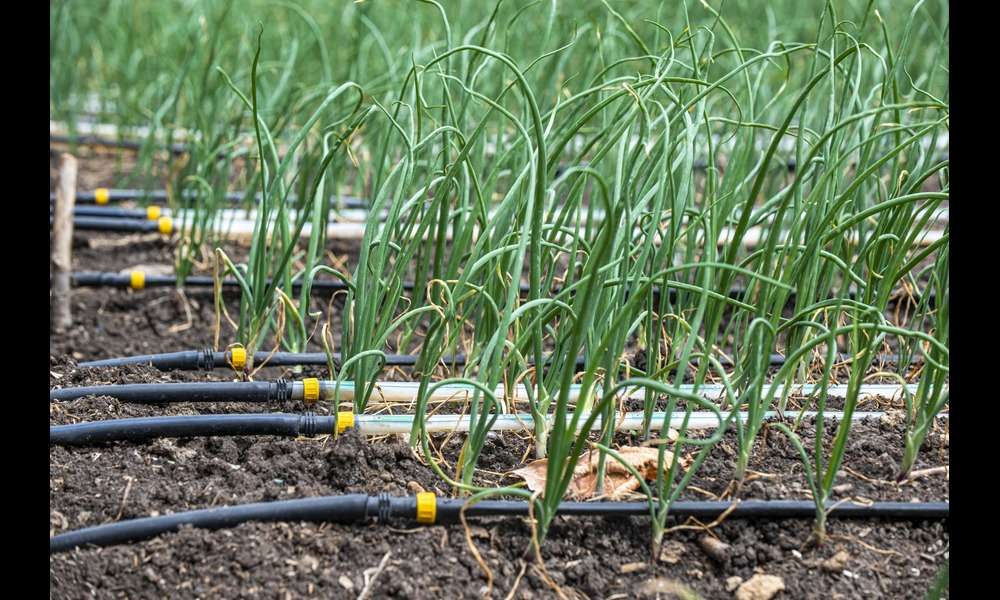
- High Efficient Irrigation – Implement drip irrigation as it saves water and delivers the right amount to crop root zone.
- Trellising – ensure tall growing crops such as tomato, or cucumber have crop support.
- Pruning – removing of some leaves to enhance high fruiting and airflow.
- Intergrated Pest Management (IPM) – use of organic pest control methods such as Predator insects to reduce pesticide effect.
- Automated Irrigation – use of automated watering lowers water wastage and labour costs.
Deciding to Start Greenhouse Farming? Consider the Factors Below
- Type of crop to grow – helps determine the design of the greenhouse. Cold loving crops will require high tunnel greenhouse with high gutter height.
- Size of available land – what size of land is available and what portion do you want to utilize under greenhouse farming?
- Water availability – where do you source water from? Ensure your water supply is reliable.
- Soil PH – What is the PH of your soil? Crops have different PH requirements.
- Budget – how much do you want to invest in greenhouse farming. It should cater for the size of greenhouse you want and farming expenses.
Challenges with Greenhouse Farming in Kenya
- High cost of investment – the cost can be high but it is worth investment. You can get financing from banks, Saccos and Money Market Funds.
- Requires proper management Skills – consider benchmarking from successful farmers. Our team will connect you with a network of farmers you can learn from.
- Greenhouse requires high care – the greenhouse polythene is delicate. Keep it away from sharp objects, and children.
- Market – grow high value and marketable crops such as tomato, capsicum, cucumber, strawberry, herbs, and vegetables.
Frequently Asked Questions
1. What is the cost of a greenhouse in Kenya?
KES 150,000 – KES 1,000,000+.
2. How much is a small greenhouse in Kenya?
KES 150,000 – KES 200,000.
3. Which crops grow best in greenhouses?
Tomato, capsicum, cucumber, strawberry, vegetables, herbs and flowers.
4. How much is a greenhouse net in Kenya?
KES 13,000 – KES 37,000.
5. How much do you need to start a greenhouse?
As low as KES 200,000.
6. What is the best material to use for a greenhouse?
UV treated greenhouse polythene sheet.
7. How long does a greenhouse last?
20 years or more.
8. How long does it take to grow tomatoes in a greenhouse?
60 – 90 days.
9. How profitable is greenhouse farming in Kenya?
Depends on the size and yield.
10.Who Constructs Greenhouses in Kenya?
Faulu Irrigation LTD.
Leave a Reply