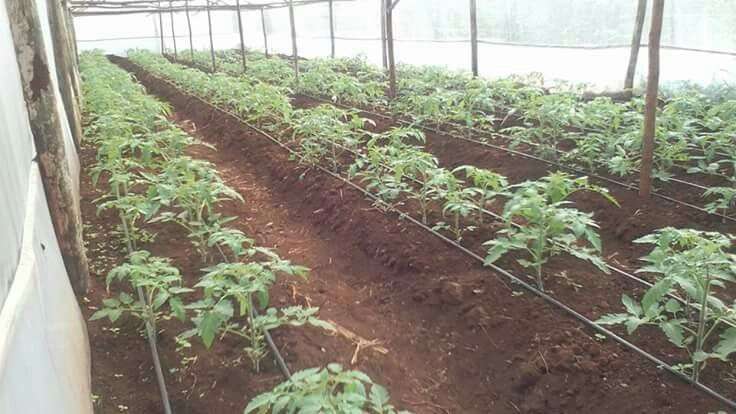
Drip Irrigation system full kit on stock at Faulu Irrigation LTD maximizes water distribution and reduces wastage. The cost of drip irrigation system in Kenya now ranges between KES 130,000 – KES 190,000. Drip irrigation system is designed for efficient irrigation of vegetables, onions, tomato, fruits and maize plants.
The drip irrigation system by Faulu Irrigation LTD is of high quality and built to last long under good condition.
Cost of Drip Irrigation System in Kenya
The cost of drip irrigation system with complete accessories varies with farm size and number of driplines used. Drip irrigation system packages at Faulu Irrigation LTD cost as shown in the table:
| Farm size(acres) | Cost per Number of Driplines | ||
| 1 dripline | 2 driplines | 3 driplines | |
| 1 acre | KES 135,000 | KES 155,000 | KES 175,000 |
| 1/2 acre | KES 67,000 | KES 78,000 | KES 87,000 |
| 1/4 acre | KES 34,000 | KES 40,000 | KES 45,000 |
| 1/8 acre | KES 17,000 | KES 21,000 | KES 27,000 |
Drip Irrigation System for Sale In Nairobi
Located in Nairobi, we have a wide range of drip irrigation accessories at affordable prices in Kenya. Our drip irrigation system is manufactured for high performance in irrigation of fruits, vegetables and flowers. We use high quality and durable UV resistant driplines, HDPE pipes and fittings. Other components including Fertilizer injector, pressure regulator and water pumps also available if needed.
Call 0717120401
Drip Irrigation System In Kenya
Our drip irrigation system includes:
- HDPE Pipes – mainline and sub-mainline connection to move water from the source to driplines
- HDPE fittings – include elbow, tee, coupling, End Caps and adapter fittings for HDPE pipe connection.
- Ball Valves – for control irrigation water entering a farm section.
- Dripline – 0.3 mm or 0.4 mm driplines with emitter hole in spacing of 15, 20 or 30 cm for precise watering at crop root zones.
- Drip connectors – take off, drip valves, middle connectors and end plugs.
Driplines Used in Drip Irrigation System
Our driplines are of two types which varies with thickness:
- 3 mm dripline – suitable for low pressure, drip irrigation method relying on gravity for water flow.
- 4 mm dripline – highly durable and ideal for high pressure flow.
Design of drip irrigation System
For drip irrigation to work effectively, your farm should be divided into zones or bed. During irrigation, you irrigate one bed or zone at a time.
Number of driplines per bed
You can lay 2-4 driplines per bed. The number of driplines depends on the crop spacing.
For crops with close spacing, you can use 3 or 4 driplines in a single bed section.
Common crops take the following driplines in a bed:
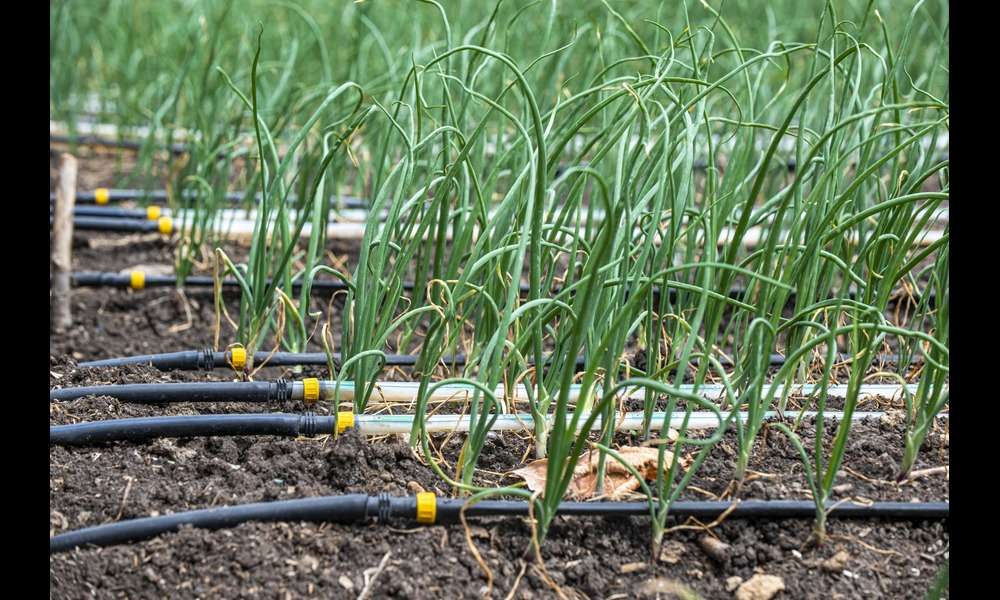
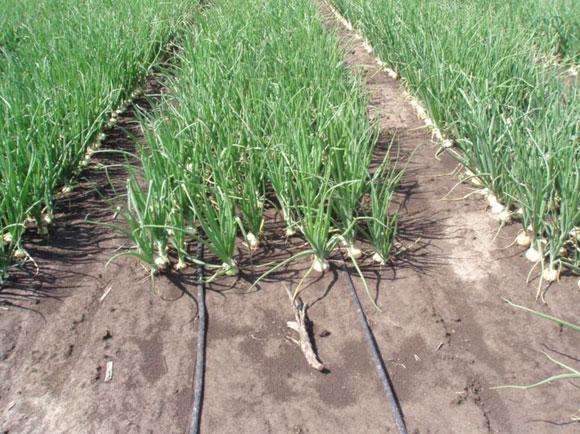
- Onions – 3 or driplines.
- Capsicum – 2 driplines per bed
- Tomato – 2 driplines per bed
- Strawberry – two driplines
- Garlic – 3 driplines per bed
- Cucumber – 3 driplines per bed.
Bed spacing
Beds are often spaced at least 30 – 45 cm apart.
Dripline Laying
Driplines are laid in accordance with row spacing of crops. For common crops such as tomato, onion and capsicum rows are spaced 30 cm wide apart. The run length is often 50 or 100m.
Type of Dripline to Use
The type of dripline emitter spacing varies with crop type. Suitable crops for various dripline emitter spacing is as follows:
- 15 cm dripline – onion, garlic, coriander, carrots, and peas.
- 20 cm dripline – tomato, strawberry, kales, spinach, broccoli and cucumber.
- 30 cm dripline – cabbage, maize, fruit trees and other wide spaced plants.
Drip Irrigation System Recommended Crops
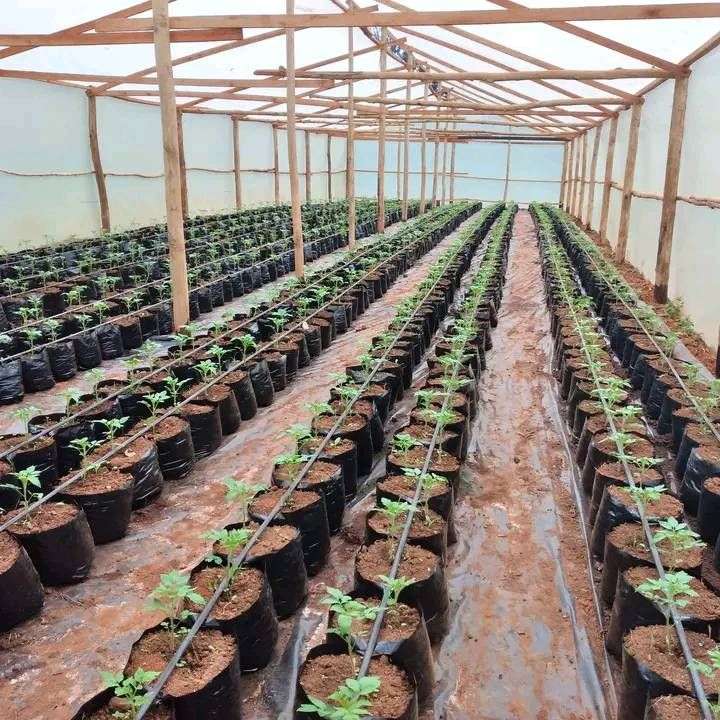
- Capsicum – popular plant that does well in open field or greenhouse. Drip irrigation is ideal for sufficient moisture required for growth.
- Tomato – drip irrigation allows for consistent moisture and low risk of fungal rot.
- Onions – for sufficient water access and control in critical growth stage especially bulb formation.
- Garlic – drip irrigation enhances high quality and large bulb formation.
- Water melon – it grows in hot and arid areas. Drip irrigation is best to utilize water and allow uniform growth.
- Vegetable – leafy greens including kales, cabbage, swiss chards, broccoli and manage requires constant moisture but in controlled amounts.
- Strawberry – a high value crop that spreads and produces fruits on the ground. Drip irrigation prevents fungal rot on the leaves and fruit.
Drip irrigation is often recommended for plants that are susceptible to leaf or fungal rot. It allows for high yield and quality fruits. For instance tomato water with drip irrigation develop big juicy and less rot fruit.
How Drip Irrigation System Wets the field
Drip irrigation waters your crops on precise and slow manner around the roots. Constant drops penetrates deep and wets up to 20cm near the root zone.
Drip irrigation works by gravity on a flat farm but can also use pressure water pumps to water slopy land. The high pressure flow that water pumps generate ensures water reaches all sections of the farm.
How to Determine which Drip Irrigation System to Buy
Consider a number of factors explained:
- Type of crops to grow – learn the water requirements of crops you want to grow to determine if drip irrigation system matches its needs.
- Farm Size – the size of farm decides which kit to buy and gives you a budget estimate.
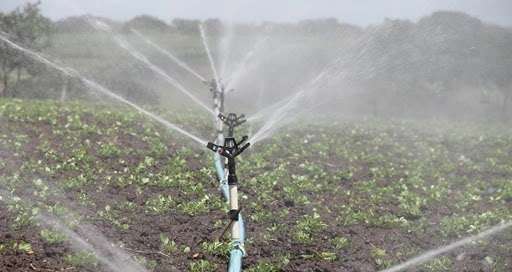
- Soil type – check the type of soil in your farm. If it is has low water retention, you will need a sprinkler.
- Farm elevation – the topography of your farm decides if you are going to include a water pump in the system. For flat small farm, you will just use gravity, no need for pump.
Key Steps for Drip Irrigation System Installation
- Site Survey – The drip irrigation system supplier must start by visiting your farm to check and prepare the layout.
- Land preparation – the client should then cultivate the land, remove stones and vegetation. This ensures the farm is ready for drip kit installation.
- Water tank Setup – Buy a water tank and ensure the tower is built and the tank setup. You should have a constant supply of water from borehole or river.
- Digging trenches – Our technician guides casual labourers to make trenches for laying Pipe connection.
- Pipe connection – tank connection to the mainline HDPE pipe. The mainline HDPE is laid on the trenches and connected using HDPE connectors.
- Connecting water filter – near the tank on the mainline, a water filter is connected to remove debris.
- Hydrant of ball valve installation – make a hydrant or section with a ball valve to control irrigation.
- Sub-mainline connection – moves water to the farm sections.
- Delivery pipe connection – using rubber grommets and Start connector to join PE delivery pipe to the submain.
- Dripline connection – Connection of PE delivery pipe to driplines laid on beds.
- Test the system – open the water connection to test and flush the system.
- End connection – seal the ends of driplines using drip end plug. Also seal the ends of mainline and sub-mainline HDPE pipes using end caps.
Buy Drip Irrigation System From Faulu Irrigation LTD
Drip irrigation systems purchased at Faulu Irrigation LTD will guarantee you 5 years of efficient irrigation. On top of that we give you free guidance on which drip irrigation accessories and dripline to use. Besides all that you get installation at affordable prices by our expert technicians.
Call 0717120401
Frequently Asked Questions
1. How much does a 1 acre drip irrigation system cost?
KES 130,000 – KES 180,000.
2. How much does dripline roll cost in Kenya?
KES 7,500 – KES 9,000.
3. How many years does drip irrigation last?
7 years.
4. Which drip irrigation system is best?
It depends of your farm size. For small gardens, simple gravity-distributed systems are ideal.
5. How long to run drip irrigation for raised beds?
30 – 45 minutes.
6. What is the thickness of driplines used in drip irrigation?
0.3 or 0.4 mm.
7. What plants benefit from drip irrigation?
Vegetables, onions, capsicum, strawberry, flowers, herbs and fruits.
8. How often should I water with drip irrigation?
3 times a week.
9. What is the common problem in drip irrigation?
Clogging of driplines. Use water filters
10.Where Can I Buy Drip irrigation System in Kenya
Faulu Irrigation LTD.
Leave a Reply