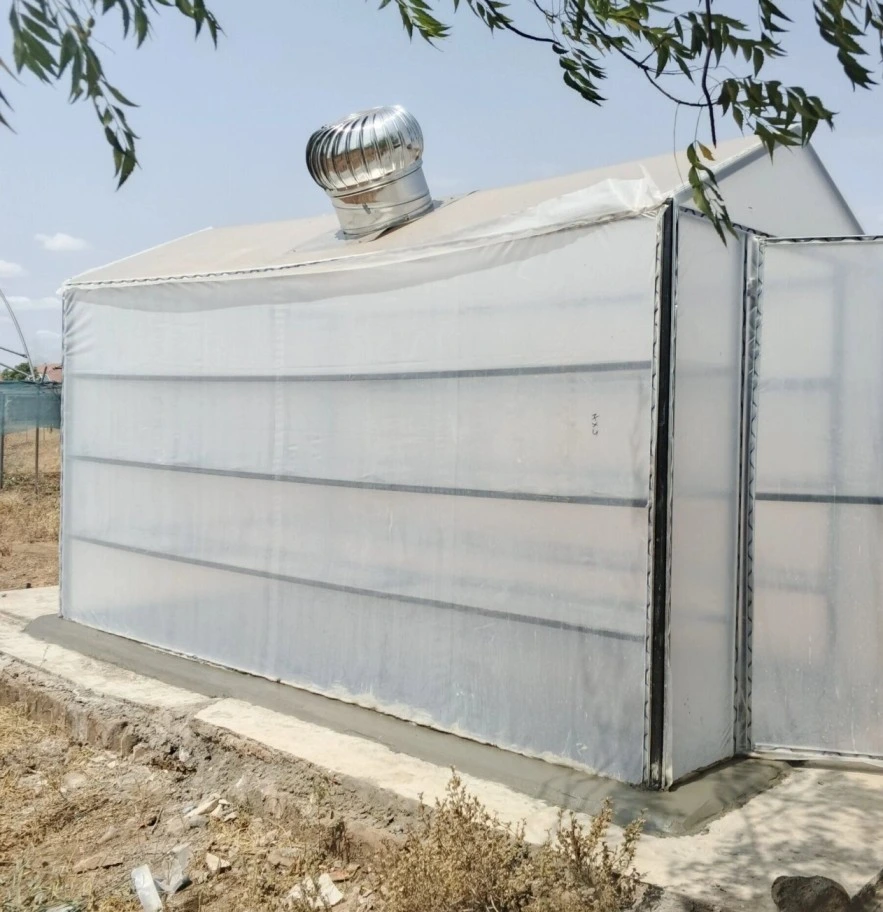
Solar dryers are low-cost solutions for drying vegetables, herbs, grains, coffee, and tubers. By drying crops, farmers can prevent post-harvest losses and meet quality ideal for market. Faulu Irrigation LTD has affordable solar dryers for agriculture in Kenya built to offer efficient crop dehydration. We let you choose between galvanized steel or wooden solar dryers of different sizes as per your budget. The common sizes of solar dryers we design come in dimensions of 3m x 3m, 5m x 8m, and 6m x 6m and a height of 2m. We also build solar dryers with greenhouse design available in sizes of 8 x 15m, 8 x 30m and 16 x 30m.
Call 0717120401
Solar Dryers for Agriculture Produce Drying
Solar dryers are artificial structures that use sunlight and air circulation to dry crop harvest. Transparent polythene sheet used as the cover for the dryer, allows sunlight in and prevent heat loss.
Solar Dryer Prices in Kenya 2026
Our solar dryer prices vary with the sizes and design:
| Solar Dryer Design | Solar Dryer Measurement | Price (KES) |
| Tunnel Solar dryer | 8m x 15m | 630,000 |
| 8m x 24 m | 764,000 | |
| 8m x 30 m | 815,000 | |
| Flat Roofed | 3m x 3m x 2m | 162,500 |
| 5m x 8m x 2m | 305,000 | |
| 6m x 6m x 2m | 325,000 |
Popular Types of Solar Dryers for Agriculture in Kenya
Direct Solar Dryers
The most common type of solar dryers in Kenya. These dryers expose products to sunlight because of sunlight penetration polythene material. We recommend these kind of solar dryers to small scale farmers.
Hybrid Solar Dryers
Type of dryer that use solar power, and heat energy to dry produce. It has a furnace placed outside which burns charcoal or biomass and direct hot air into the dryer. Hybrid dryers are fast and efficient but much expensive than normal direct solar dryers.
Because of their faster drying and high drying capacity, hybrid dryers work best for large scale farmers. Commercial exporters of value added produce such as potato, dried mango, pineapple, coffee beans and vegetables need hybrid dryers.
Construction of Solar Dryer for Agriculture: What Materials are Used
The common materials required to build solar dryers are:
- Galvanized Steel Pipes – makes up the skeleton structure.
- Steel profiles – for attachment of the polythene sheet to the structure.
- Zig-zag wires – locks the polythene cover onto the structure.
- 200-micron UV treated polythene sheet – traps heat and allows sunlight inside.
- Tapping Screws – to join the steel structure.
- Concrete; cement, ballast and sand for the base.
- Dam liner – absorbs heat
Solar dryers for agriculture are designed using high grade steel and UV resistant polythene sheet.
Requirements for Solar Dryers to Operate
- Solar panels with electric cable – to power the fans
- Battery cells – Optional but important for storing energy for use when sunlight is not available.
- Radiator – used to heat the drying environment for continuous dehydration when solar power is low.
- Air inlet fan – used to direct air into the solar dryer
- Exhaust fan – removes moist air outside the dryer.
Crop Specific Use of Solar Dryers in Kenya
Solar dryers are best for agriculture in Kenya as they are excellent for dehydration of:
- Vegetable leaves – includes chopped cabbage, kales or spinach.
- Mango – dried mango chips
- Pineapple – also dried to form crisps.
- Herbs – such as ginger, mint, cilantro, oregano and other medicinal herbs.
- Potato, cassava and yams.
- Coffee beans
- Cocoa
- Tobbaco leaves
Our solar dryers are used to dry vegetable leaves, maize, wheat, cassava, millet, sorghum,
The Working Principle of Solar Dryers
Air flows in through a ventilation as it pushed in by a fan installed on the outside. Inside the structure are drying compartments and an insect net to hold the produce.
Cold air flowing inside gets heated and circulates over produce in the drying compartments. Hot air heats up moisture and carries the steam outside through an exhaust fan installed on the roof.
Factors to Consider when Choosing a Solar Dryer for Agriculture
- Size of produce – the amount of yield determines the size of dryer or drying capacity that suits you.
- Scale of production – if you are a small-scale grower, it would be best if you buy a normal dryer due to low drying capacity.
- Market of produce – the market demand will determine which dryer you need. For export market, a hybrid solar dryer will meet quality and consistent quantity needed.
- Solar irradiance – consider the hours of maximum sunlight in your area to decide whether you need an hybrid or normal direct dryer.
Reasons Why Solar Dryers are Important for Agriculture
- Prevents Loss of Produce – harvest such as mango rot fast and farmers incur losses when market demand is low. To reduce losses mangos can be dried and packaged for sale.
- Keeps produce safe from mould growth – the drying chamber is well conditioned thus no chance of mould or afflotoxin on grains.
- Crop products are safe from bacteria – no chance of bacteria because dirt, dust and microorganisms cannot enter the dryer.
- Produce take short time to dry – solar dryers can dehydrated produce in 24 -72 hours. Unlike open sun drying, rain or cloudy conditions does not slow down dehydration.
- The drying harvest is safe from animals – no risk of animals feeding on dried grains or vegetables.
- Suitable for many crops – solar dryers are used to dry vegetables, corn, herbs, fruits, coffee and many other crops.
- Promotes sustainability – by preservation of harvested produce, farmers can sell at high market price when shortage in the market is felt.
- Enhances food Safety – drying reduces risk of food spoilage and also ensure surplus safe food is available.
Frequently Asked Questions
1. How much does a solar dryer cost in Kenya?
KES 100,000 – KES 1,000,000. Price can go beyond this range.
2. What are the types of Solar dryers available in Kenya?
Direct tunnel solar dryers and hybrid solar dyers
3. What sizes of solar dryers do you construct?
3m x 3m x 2m, 5m x 8m x 2m, 6m x 6m x 2m, 8m x 15m and 8m x 24m.
4. What is the capacity of a solar dryer?
It depends on the size. The minimum size can hold 300 – 500 kg
5. Where can I Buy Solar Dryers in Kenya?
Faulu Irrigation LTD
Leave a Reply