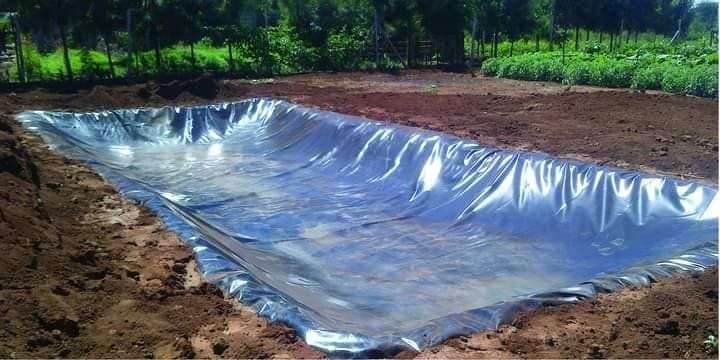
Installing Dam Liners helps reduce water shortage and ensure high resilience during dry seasons. Dam Liners in Nairobi in wide thickness gauges from 0.3mm – 1m can be purchased at Faulu Irrigation LTD. The geomembrane or dam liner prices in Nairobi range from KES 210 – KES 450 per square meter.
The team often packages your requested dam liners with a lot of professionalism. Custom sizes are also available depending on the requirements of your projects.
Call 0717120401
Key Takeaways
- HDPE dam liners are the most durable and popular in Kenya.
- Dam liner prices in Nairobi range from KES 210 to KES 450 per square meter.
- Thicker liners offer better puncture resistance and longevity.
- Proper installation is just as important as liner quality.
- Fish farming ponds require food-safe, UV-resistant liners.
Dam Liner Prices in Nairobi
Dam liner prices in Nairobi mainly depend on thickness and material quality.
| Thickness | Recommended Use | Price Range (KES/m²) |
| 0.3mm | Small garden ponds | KES 210 |
| 0.5mm | Medium irrigation ponds | KES 240 |
| 0.75mm | Fish farming ponds | KES 350 |
| 1.0mm | Large reservoirs | KES 450 |
HDPE liners are durable, UV-resistant, and suitable for long-term agricultural use. For that reason, they are popular and reliable.
Why Dam Liners Are Essential
Water seepage is one of the biggest causes of water loss in earth dams and ponds. A properly installed dam liner prevents seepage and allows farmers to store water for irrigation during dry seasons. This makes dam liners essential for regions experiencing irregular rainfall patterns.
Types of Dam Liners in Kenya
HDPE Dam Liners
HDPE (High-Density Polyethylene) liners are the most common in Kenya because they are strong and resistant to UV rays. They can last between 10 and 30 years with proper installation.
Advantages:
- High puncture resistance
- UV stabilized
- Long lifespan
- Suitable for fish ponds and irrigation dams
PVC Dam Liners
PVC liners are flexible and easier to install. They are suitable for smaller ponds and temporary water storage projects.
Advantages:
- Easy to fold and shape
- Affordable
- Simple installation
LLDPE Liners
LLDPE liners are becoming popular because they combine flexibility with good durability. They adapt well to uneven ground surfaces.
Specifications of Dam Liners
- Thickness: 0.3mm, 0.5mm, 0.75mm and 1 mm
- Tensile strength: 15–25 MPa
- UV resistance: Yes
- Temperature resistance: -70°C to +60°C
Best Dam Liner Thickness for Different Applications
0.3mm Liners
- Small home gardens
- Decorative ponds
0.5mm Liners
- Small ponds
- Water barrels
0.75mm Liners
- Fishpond water storage
- Domestic water reservoirs
- Dams
1.0mm liner
- Fishponds
- Large dams or water pans.
- Concrete tanks
- Septic Pits
- Industrial mining sites
Farmers with rocky soils should avoid thin liners because puncture risks are higher.
How to Calculate Dam Liner Requirements
The size of the dam liner is estimated by calculating the length and width separately as follows:
Length = base length + 2 (depth) + 1 m overlap
Width = base width + 2 (depth) + 1 m overlap.
How to Lay & Install Dam Liners
Step 1: Site Preparation
Remove stones, roots, and sharp objects. Smooth the surface to avoid punctures.
Step 2: Excavation
Shape the pond according to your design. Ensure slopes are stable.
Step 3: Protective Layer Installation
Use sand or geotextile underlay to protect the liner.
Step 4: Lay the Liner
Spread the liner carefully and avoid dragging it over rough surfaces.
Step 5: Welding and Seaming
Professional heat welding ensures watertight joints.
Step 6: Anchoring
Secure liner edges using trenches or concrete anchoring.
Improper installation is one of the main reasons liners fail prematurely.
Benefits of Dam Liners
- Reduced water wastage
- Improved irrigation reliability
- Better fish farming conditions
- Increased farm productivity
- Lower long-term water costs
Tips for choosing the best Dam Liners
- Consider the water volumes to be stored. If the target water volume is high, use a high gauge dam liner.
- Check the texture of the dam liner. A good dam liner is hard or rigid.
- Always seek to know the manufacturer’s information.
- Match the size of the dam or pond to the liner. Calculation should be done well to ensure it properly fits without leaving spaces.
Applications of Dam Liners
- To harvest and contain water in dams or water pans for irrigation farming.
- Securing fishponds to make it convenient for fish farming.
- To handle wastewater in septic pits or water treatment plants.
- For holding water in barrels or corrugated steel tanks.
- Industrial mining as mats for holding the mineral ore.
- Check the material of the dam liner. It should be UV treated to ensure it can last for long period of time.
Dam Liners for Fish Farming
Fish farming requires food-safe liners that resist leaks and algae buildup. HDPE liners are preferred because they are durable and easy to clean.
Recommended thickness:
- 0.75mm
- 1.0mm
Maintenance Tips for Dam Liners
To maximize lifespan:
- Avoid sharp objects near the dam liner
- Keep animals away from the dam liner
- Inspect for punctures regularly
- Prevent excessive algae growth
- Repair small tears immediately
How Long Do Dam Liners Last?
The lifespan of dam liners vary with the thickness or gauge.
It is often between 15 – 30 years.
Where to Buy Dam Liners in Nairobi
Faulu Irrigation LTD.
Frequently Asked Questions
1. What is the cost of dam liners in Nairobi?
KES 210 – KES 450 per square meter.
2. Which dam liner is best for fish farming?
0.75mm and 1.0mm
3. How long do HDPE dam liners last?
15 – 30 years.
4. Are dam liners waterproof?
Yes
5. What dam liner gauge is best for irrigation ponds?
0.5mm or 0.75mm HDPE liners.
6. Can I install a dam liner myself?
Not recommended. Consider professional installation.
7. Why do some dam liners fail quickly?
Poor installation, thin gauges, and recycled materials are the main causes of premature failure.
8. What is the difference between HDPE and PVC liners?
HDPE is stronger and longer-lasting, while PVC is more flexible and affordable.
9. Do dam liners need maintenance?
Yes. Regular inspections and repairs help extend liner lifespan.
10. Where to Buy Dam Liners?
Faulu Irrigation LTD.
Leave a Reply