
We have high quality dam liners in rolls of varying gauge; 0.3mm, 0.5mm, 0.75mm and 1 mm. The cost of dam liners in Kenya are KES 210 for 0.3mm, KES 240 for 0.5mm, KES 340 for 0.75mm and KES 430 for 1 mm.
Get Heavy Duty Dam Liners from Faulu Irrigation LTD designed with high UV resistance for long lasting performance.
If you are looking for a way to collect water to boost irrigation and home needs, we are a call away.
Get in touch with us on 0717120401.
Quick Takeaways
- Dam liners exist in gauge sizes of 0.3 mm, 0.5 mm, 0.75 mm and 1 mm.
- The main uses include water storage, fish farming, mining, and irrigation water needs.
- Cost of dam liners in Kenya ranges between KES 190 – 430 per square meter.
- Dam liner cost in Kenya varies with the gauge or thickness.
- Dam Liners are made from HDPE materials which are UV resistant.
- To ensure you get value from dam Liners, proper installation is key.
- Proper care of dam liners extends their lifespan.
- Durable and best quality Dam Liners are in stock at Faulu Irrigation LTD.
Cost of Dam Liners in Kenya
Dam Liner Prices range between KES 190 – KES 430 per square meter.
Here are the common prices for different gauges.
- 0.3 mm – KES 210
- 0.5mm – KES 240.
- 0.75mm – KES 350.
- 1 mm – KES 430.
What Are Dam Liners?
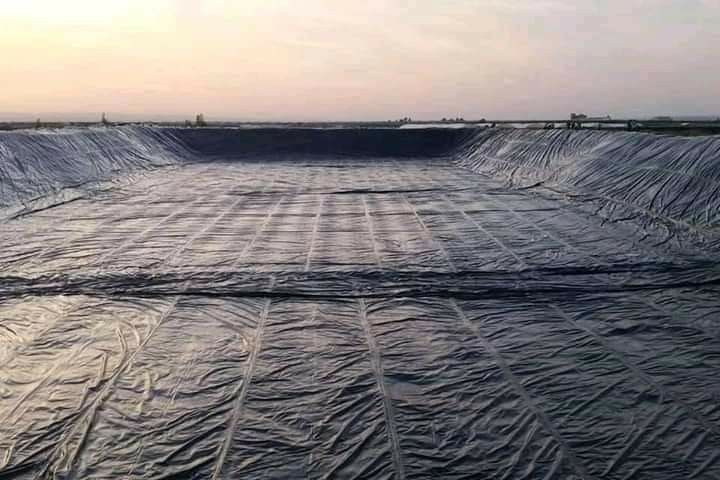
Dam Liners are indispensable for storing water, waste water handling, septic tanks, and mining applications.
The dam liner is a waterproof and smooth plastic sheet which prevents water seepage. They are crucial in areas where the soil is highly porous.
Why Dam Liners are Effective for Water Storage
To store water efficiently for domestic use, fish farming and irrigation needs, farmers can rely on dam liners.
Cost and Specifications of Dam Liners in Kenya
- Sold in gauges of 0.3 mm, 0.5 mm, 0.75 mm and 1.0 mm
- Made from High Density Polyethylene material.
- Durability: 25 – 50 years.
- Standard roll dimensions: 8 m by 50m.
- Color: Black
- UV resistant
Choosing the Right Dam Liner for your Water Pond
To get the best dam liner for your water pond needs, you must consider the factors below.
- Size of your dam: the dam liner should be sized to fit your dam or reservoir. Sizing will include an extension that anchors it to the ground.
- The application: depending on what you are intending to do with the liner, it should match your needs. Heavy duty applications require high gauge.
- Type of soil: rough soil requires a thicker dam liner for long lasting performance.
- Cost: often the dam liner cost will depend on gauge. You also must consider your budget, though your intended use is the main consideration.
Benefits of Dam Liners Use in Kenya
- Ensures reliable water access: the waterproof nature ensures no drop of water seeps to the ground.
- Boosts agriculture through irrigation farming: by storing water for irrigation, crop farming is possible.
- Environmental safety: dam liners are safe for use as they don’t pollute water or soil.
- Protects water ecosystems: the dam liner prevents water contamination from leaking underground sewer lines or surface run offs.
- Prevent soil erosion: by storing water it prevents surface run offs during rains thus no erosion.
- Enhances consistent production : farming can be done continuously even in dry seasons due to sufficient water access.
- Enhances fish farming: With dam liners, you can store water and engage in fish rearing.
How to Install a Dam Liner
- Excavate the area to make a pond or dam
- Clear the excavation to remove rocks and roots.
- Make a trench 2 ft deep around the edges of the pond. The trench will hold the liner to the ground.
- Unroll the liner carefully, starting from one side and pulling it across to the other.
- Once positioned, tuck the edges into the anchor trench and backfill it with soil.
- After ensuring the liner is positioned to the ground on all sides, fill with water.
- Observe the water level after 3 hours. If it drops, there is puncture in the liner. Remove the water, examine the liner joints and weld any part that is leaking water.
Uses of Dam Liners
- To prevent water seepage in dams
- Covering Water pans and reservoirs to boost domestic and irrigation water needs.
- In concrete tanks to prevent water loss. It covers cracks on the concrete walls.
- In fishponds to retain water for fish farming.
- To reinforce corrugated steel tanks
- Handling sewage or wastewater in treatment plants.
- To cover septic tanks for safe containment of sewage.
- Industrial mining sites for handling mineral extracts.
Practical Tips for Care of Dam Liners
- Watch out for sharp objects which can puncture or damage the liner.
- During packaging and unrolling the liner, it is important to observe care as the rolls of dam liner can develop wears.
- Ensure the dam liner sheets overlap well when weld joining for secure connection.
- Welding should be done when the dam liners are dry.
- Always fence your dam or pond to keep away animals and children.
Frequently Asked Questions
1. What is the cost of dam liners in Kenya?
KES 190 – 430 per square meter.
2. Which is the best dam liner?
HDPE dam liners.
3. How long do pond liners last?
25 – 50 years.
4. How much is 0.5 mm dam liner in Kenya?
KES 240.
5. How do you install a dam liner on a pond?
Excavate the site, remove sharp objects, levelize the ground, unroll the liner and bury the liner extension with soil.
6. What’s the best thickness for a pond liner?
0.75 mm.
7. How much overhang should a pond liner have?
At least 30 cm over the edge.
8. Can I use concrete instead of pond liner?
Concrete is not entirely reliable as it cracks over time.
9. What should I put under a pond liner?
A layer of sand.
10. Where to Buy Dam Liners in Kenya?
Faulu Irrigation LTD.
Leave a Reply