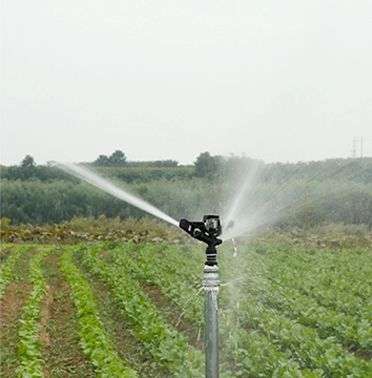
Sprinkler irrigation in Kenya offers sufficient and watering to crops with high water requirements. Wide range of sprinklers with water discharge and durable make are available at Faulu Irrigation LTD. Our range of sprinklers include plastic impact sprinkler, micro-sprinklers, Rain Gun sprinklers and large flange Sprinklers. We offer installation of the sprinkler irrigation system to ensure our farmers can water their crops with ease.
Irrigation Sprinkler System Price in Kenya
The cost of sprinkler irrigation system for 1 acre can cost between KES 60,000 – KES 85,000 depending on sprinkler size and requirements.
Overhead Sprinkler Irrigation System
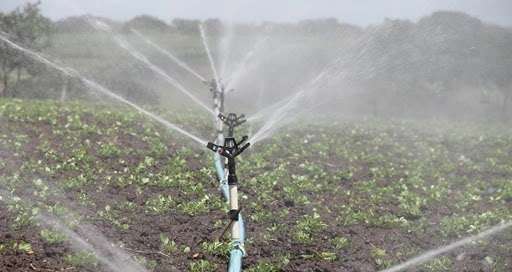
Sprinkler irrigation refers to a way of watering crops by using overhead sprays generated by sprinkler heads. The sprinkler head connects to a pipe that moves water from the source to the sprinkler.
For sprinkler irrigation to distribute water uniformly, the water pressure should be high. The required pressure depends on the size and type of sprinkler head.
Small micro sprinklers can work using normal or gravitational pressure of water. Impact sprinklers and rain guns require high pressure often 2 – 8 bars to irrigate uniformly.
To attain this pressure range, a high pressure water pump is required in the system.
Why Sprinkler Irrigation in Kenya
Sprinkler irrigation system is more affordable compared to drip irrigation. Few rain gun sprinklers can be used to water large farms by temporary connection to movable pipes. Instead of incurring high cost to buy and install drip irrigation kits, you can use movable sprinkler system. This makes the system reliable specifically for tall water intensive plants like maize, fodder, and sugarcane.
Types of Sprinklers in Kenya
Impact Sprinklers
Impact sprinklers are among the most popular choices for open-field farming. They rotate using water pressure and are suitable for vegetables, maize, beans, potatoes, and pasture.
Typical spray radius ranges from 6 – 18 metres depending on pressure and nozzle size.
Impact sprinklers come in inlet sizes of ½, ¾ and 1 inch sizes.
Rain Gun Sprinklers
Rain guns are designed for large commercial farms. They deliver high volumes of water over distances exceeding 30 metres. Rain gun sprinklers are available in sizes of 1″, 1.25″, 1.5″, 2″ and 2’’.
Generally, rain gun sprinklers are used to water:
- Sugarcane
- Animal pasture such as Napier grass, lucerne, Oats, and Kikuyu grass.
- Vegetables. For example cabbages, kales and spinach.
- Wheat
- Cotton
- Barley
- Tobbaco
- Maize plantations
- Fields. For dust suppression in fields and construction sites.
Rain guns require higher operating pressure than standard impact sprinklers.
Micro Sprinklers
Micro sprinklers deliver fine droplets close to the root zone. The common micro-sprinklers come in inlet sizes of ½ inch.
Ideal for:
- Fruits such as avocado, apples and citrus
- Green Vegetables and herbs.
- Peas
- Onions and garlic.
- Tree Nurseries
- Orchards
Compared with rain guns, micro sprinklers consume less water and has low soil erosion rate.
Pop-up Sprinklers
Smart types of sprinkler heads used to water lawn grasses and fields.
Pop-up sprinklers are highly efficient as they operate while automated. Designed with durable plastic body, adjustable discharge and wide irrigation coverage.
Pop up sprinkler options include: ¾, 1 and 1¼ inch sizes.
Requirements for Setting Up a Sprinkler Irrigation System
- Reliable water source
- Water storage tank or reservoir
- High Pressure Water pump
- HDPE pipe or Layflat PE Pipe
- Pipe Connectors
- Water filter
- Sprinkler heads
Crops Suitable for Overhead Sprinkler Irrigation in Kenya
Sprinkler irrigation is highly versatile and supports a wide range of crops in Kenya.
Vegetables
- Cabbage
- Tomatoes
- Spinach
- Kale (Sukuma Wiki)
- Onions
- Carrots
Field Crops
- Maize
- Beans
- Potatoes
- Wheat
- Sorghum
Fodder Crops
- Napier Grass
- Rhodes Grass
- Lucerne
Cash Crops
- Sugarcane
- Cotton
- Barley
- Tobbaco
- Coffee
- Tea
Fruit Trees
- Citrus
- Mangoes
- Avocados
- Macadamia
How to Design a Sprinkler Irrigation System
For high efficiency and crop yield, proper sprinkler irrigation system design is essential.
1. Assess the Water Source
Whether you are sourcing from a river, dam or pond, water should be clean and sufficient for uniform irrigation.
2. Measure the Farm
Measure the farm size, distance from water source and elevation to design the sprinkler system. The measurements are important for correct pipe length, sprinkler spacing and pump sizing.
3. Choose the Right Sprinklers
Consider the farm size, soil type, crop water needs and pressure requirements. The farm size will determine the appropriate sprinkler size you need. For instance a 1 acre of farm requires 3 rain gun sprinklers of 1 inch size.
4. Calculate Sprinkler Spacing
Sprinklers are often spaced with overlapping spray radius to ensure no dry area is left dry.
For example, if a sprinkler throws water over a 20-metre diameter, spacing of about 10–13 metres often provides more uniform irrigation. The exact spacing depends on the sprinkler size and nozzles.
5. Select the right water Pump
Always ensure the water pump has high pressure than the sprinkler for maximum discharge.
How to Buy the Best Sprinkler for Your Farm
When buying sprinklers, always consider:
1. Crop Type
Large field crops require different sprinklers than orchards or greenhouses.
2. Water Pressure
Not every sprinkler performs well under low pressure. Always confirm the manufacturer’s recommended operating pressure.
3. Soil Type
- Sandy soils drain quickly and may require lower application rates with more frequent irrigation.
- Clay soils absorb water more slowly and benefit from lower application rates to reduce runoff.
4. Farm Size
- Small farms often benefit from portable sprinkler systems.
- Large farms may justify semi-permanent or permanent installations.
5. Material Quality
Go for durable sprinklers which can be sourced from popular suppliers such as Faulu Irrigation LTD. Consider durable impact plastic sprinklers, brass rain guns and sprinkler heads.
Benefits of Sprinkler Irrigation System in Kenya
- Uniform water application
- Reduced labour requirements
- Suitable for uneven terrain
- Better crop establishment
- Is highly effective for less compact soil with low water retention rate.
- Works for wide range of field crops
Common Challenges with Sprinkler Irrigation
- Highly water intensive – ensure the water source is highly reliable.
- Wind can reduce irrigation uniformity – don’t water during windy hours.
- High pumping costs – you can opt for solar pumps which have low operation cost.
- Nozzle clogging – use a suction strainer or filter to prevent debris
Maintaining Your Sprinkler Irrigation System
Routine maintenance helps extend equipment life and maintain uniform water application.
Best Sprinkler System Maintenance Practices
- Clean the suction strainers well after use.
- Flush the Sprinkler connection pipes to remove debris
- Repair leaking pipes or connectors
- Replace damaged nozzles
- Lubricate moving parts of the sprinklers
- Store the sprinkler well if not in use.
Where to Buy Sprinklers for Irrigation in Kenya
One of the most Popular sprinkler irrigation system supplier in Kenya is Faulu irrigation LTD. We have the best prices for sprinklers and rain guns coupled with cheap reliable installation.
Call 0717120401
Frequently Asked Questions
1. What are the types of sprinklers for irrigation in Kenya?
Impact Sprinklers, rain gun sprinklers, micro sprinklers, and flange sprinklers.
2. How much does a sprinkler irrigation system cost in Kenya?
Cost depends on farm size, sprinkler type and system connection requirements.
3. Which crops are suitable for overhead sprinkler irrigation?
Vegetables, maize, beans, potatoes, wheat, pasture, fodder crops, and fruit trees.
4. Can sprinkler irrigation work with solar pumps?
Solar pumps can generate sufficient pressure required for sprinkler irrigation.
5. How much water pressure is required for sprinkler irrigation?
2 – 8 bars as per the size of the sprinkler used.
6. How many sprinklers per zone for irrigation?
It depends on the size of the zone and sprinkler heads.
7. What size area can a rain gun irrigate?
18 – 60 meters.
8. Can sprinkler irrigation be used on sloping land?
Yes. Sprinklers can be designed to water slopy lands.
9. How do I choose the best sprinkler for my farm?
It depends on the crop type, soil, water source and farm size.
10. Where can I buy sprinkler irrigation equipment in Kenya?
Faulu Irrigation LTD
Leave a Reply