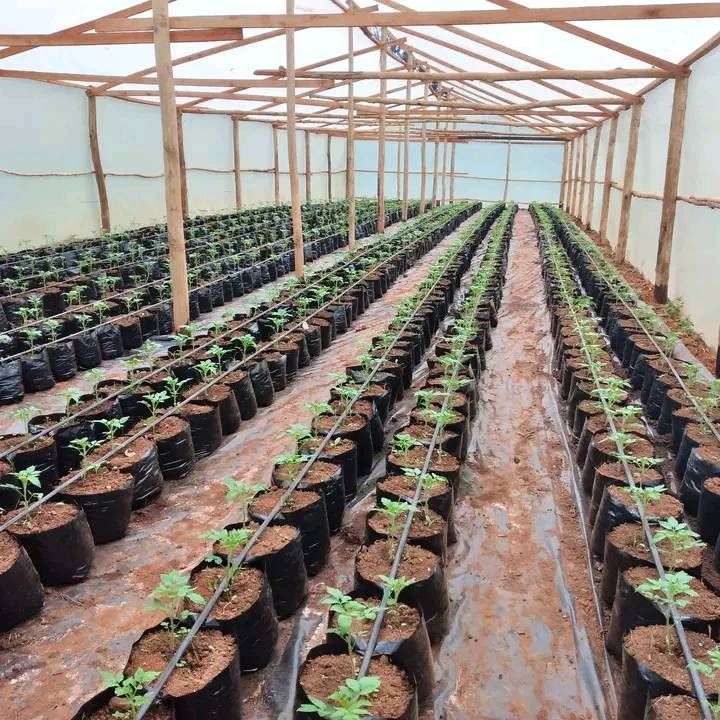
Greenhouse farming is transforming agriculture with optimal growing conditions, low pest activity and moisture control. Wooden Greenhouse in Kenya are built in standard sizes; 8 x 15 m, 8 x 24m, 8 x 30m and 16 x 30m. Custom built sizes exceeding 16 x 30 m are also available but cost will be higher. The cost of Wooden greenhouse in Kenya ranges from KES 170,000 – KES 550,000 for popular standard sizes. Quality and durable wooden greenhouse are installed by Faulu Irrigation LTD.
Call 0717120401.
Quick Takeaways
- Wooden greenhouses cost between KES 170,000 and KES 550,000 in Kenya.
- Common wooden greenhouse sizes are 8 x 15m, 8 x 24m, 8 x 30m and 16 x 30m.
- Wooden greenhouse is less costly than metallic greenhouse.
- A small scale or beginner farmer can start with 8 x 15m greenhouse.
- Wooden greenhouses in Kenya are best for growing tomato, capsicum, cucumber, strawberry, leafy greens and herbs.
- Wooden Greenhouse installation requires wooden poles, UV treated greenhouse polythene, nails, profiles and wires.
- Faulu Irrigation LTD deals in wooden greenhouse construction in Kenya. Wooden Greenhouse construction inclusive of drip irrigation kit.
Wooden Greenhouse in Kenya
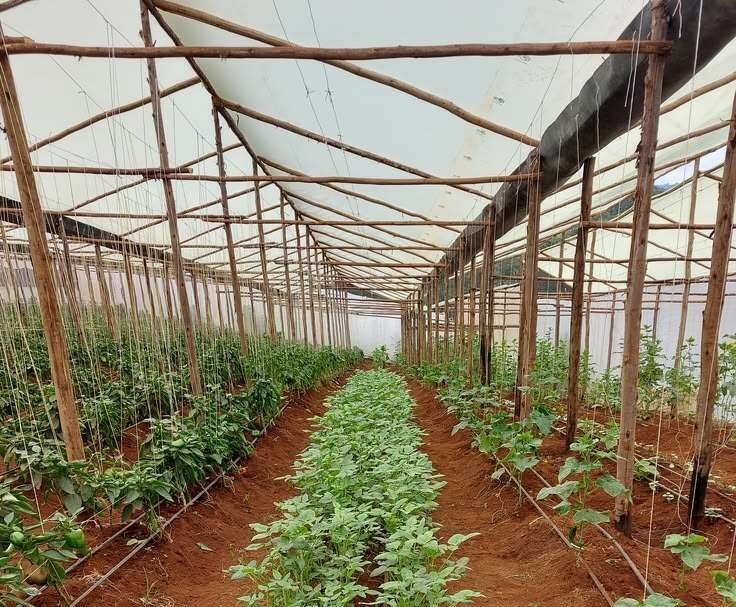
Wooden greenhouse is constructed using wooden poles and UV treated polythene sheet. It is an affordable structure with right moisture, temperature and humidity for optimal crop production. It is ideal for wide range of crops including vegetables, flowers, herbs and fruits.
Why Wooden Greenhouses Are Popular in Kenya
Many farmers start with wooden greenhouses because they can reduce startup costs by up to 40% compared to metallic structures. Additionally, wooden frames provide natural insulation, helping stabilize temperatures during cold nights and hot afternoons.
Wooden Greenhouse Prices in Kenya
| Size | Plant Capacity | Cost |
| 8m × 15m | 500 | 140,000 – 165,000 |
| 8m × 24m | 750 | 210,000 – 225,000 |
| 8m × 30m | 1,000 | 260,000 – 280,000 |
| 16m × 30m | 2,000 | 390,000 – 410,000 |
| 24m × 30m | 2,500 | KES 530,000 |
Prices typically include the greenhouse structure, polythene cover, insect nets, drip irrigation system, and installation. Transport and water tanks are often charged separately.
Common Sizes of Wooden Greenhouse in Kenya
Choosing the correct size depends on your budget, land availability, and intended crop.
Small Wooden Greenhouse (8m × 15m)
A small greenhouse structure designed for small scale farmers. It is a good starting point for farmers venturing in greenhouse farming or low budget small scale farmers. Supports small scale vegetable production for local market.
Medium Wooden Greenhouse (8m × 24m)
Another option for farmers who want to scale their produce from a small scale production.
Large Wooden Greenhouse (8m × 30m)
Offers a reliable space for commercial farmers growing for both export and local market.
Commercial Wooden Greenhouse (16m × 30m)
Best for farmers who need consistent high yield for export market. Highly reliable for vegetable, fruit or flower farming.
Designs of Wooden Greenhouses in Kenya
Greenhouse design influences ventilation, durability, and crop performance.
Gothic Design
Features a pointed roof that improves rainwater drainage.
Gable Design
Offers better airflow and increased headroom.
Materials Required for Wooden Greenhouse Construction
- Treated Wooden Poles – Strong Eucalyptus for making the support and roofing structure.
- UV-treated greenhouse polythene – best material for covering the structure.
- Channel Lock profiles – screwed on the edges of wooden poles to allow installation of the greenhouse polythene.
- Steel Wiggle wire – non corrosive wire that locks the greenhouse structure( profiles fixed to the wooden poles) firmly.
- Nails – for jointing the wooden poles together.
- Insect net – for side netting. Covers the ventilation. Allows for temperature control during daytime when temperature is high.
- Cement, Sand and ballast – mixed to make a concrete slab on each hole with a wooden pole to create firm support.
Other additional Needs
- Drip irrigation kit – ideal for efficient irrigation.
- Crop Support – necessary for crops such as capsicum, tomato or cucumber.
- Seedling trays – optional requirement for farmers who are growing seedlings.
- Cocopeat – ideal if you are growing in planting bags.
Steps for Wooden Greenhouse Construction in Kenya
- Site Visit – done to assess land suitability, water access and measurement to be used for quotation of materials needed.
- Site Selection – Choose well-drained, level land with access to water.
- Foundation Preparation – Concrete anchors strengthen the structure.
- Wooden Poles installation – Treated poles are erected and reinforced.
- Polythene Cover Installation – UV-treated cover is secured tightly.
- Drip Irrigation Setup – Drip irrigation is installed for efficient water use.
Construction usually takes between 3 and 7 days depending on greenhouse size.
What to Grow Inside a Wooden Greenhouse
Wooden greenhouses helps you venture into high income crops while saving on cost. You can grow variety of vegetables and fruits including:
- Tomatoes – Anna F1, Kilele F1 and Zarina F1 varieties.
- Capsicum – Commandant F1, Admiral F1, Pasarella F1, and California Wonder
- Cucumbers – Carmen F1, Midas and Envoy F1 varieties do well in a greenhouse.
- Strawberries – Chandler, Pajaro, Selva, and Douglas varieties.
- Lettuce – Corbana (Romaine), Casanova (Butterhead), Saula (Iceberg), and Tuska / Caipira (Lollo Rossa) does well in a greenhouse.
- Spinach – Ford Hook Giant and Bloomsdale Long Standing varieties.
- Herbs – mint, basil, oregano and parsley.
- Chillies – red chilli fetch can also be grown in a greenhouse.
Benefits of Greenhouse Farming
- Year-round production
- Reduced pest pressure
- Water conservation
- Higher yields
- Improved produce quality
- Better market timing
Wooden vs Metallic Greenhouse
| Wooden Greenhouse | Metallic Greenhouse |
| Affordable to construct | Slightly Costly to build |
| Best for Small Scale Farmers | Best for Commercial Growers |
| Gable Shaped Roof | Tunnel Shaped Roof |
| High Maintenance Needs | Low Maintenance Needs |
Lifespan of a Wooden Greenhouse
A wooden greenhouse can remain in good condition for 10 – 15 years if well maintained. Oten you will need to replace greenhouse polythene and wooden structure. To boost the lifespan of a wooden greenhouse, use treated timber to construct wooden poles.
Factors affecting Wooden Greenhouse Durability
- Quality of Wooden Poles – strong wooden poles last longer
- Weather exposure – wood rots faster in wet conditions. Painting the wooden makes them waterproof.
- Termites – termites tend to damage wooden poles. To prevent termite effect, wooden poles are treated using wood preservatives.
- Foundation stability – stable foundation built with concrete ensures your greenhouse remains strong even on rainy seasons.
Things to Consider When Choosing a Greenhouse
Right before you invest in a greenhouse, you must consider the following factors.
- Budget – choose a greenhouse size priced within the range of your budget.
- Size of land – how much space available do you wish to allocate for greenhouse farming?
- Crop type – assess requirements of crops you want to grow. For low temperature needing crops, you will need a wooden greenhouse with big ventilation.
- Water Access – assess your water source. Greenhouse farming requires reliable water access.
- Soil – soil assessment should also be done to check the health and PH. If the soil has infections such as fusarium wilt, you will need to use planting bags.
How to maintain Wooden Greenhouses
- Replace the greenhouse polythene once it gets torn.
- Replace wooden poles once they begin rotting.
- Inspect the ventilation often.
- The drip irrigation system should work properly. Check for leakages or clogging in case it doesn’t work.
- Ensure the greenhouse polythene is always intact. Fix the wiggle wire back to the channel lock profile if it slips out.
Expected Returns from Greenhouse Farming
A well managed wooden greenhouse generates high yield than growing on the open farm.
For instance, tomatoes grown in a greenhouse can yield 15 – 30 kg per plant annually.
Dealers in Wooden Greenhouse Construction in Kenya
Faulu Irrigation LTD.
Call 0717120401
Frequently Asked Questions
1. How much does a wooden greenhouse cost in Kenya?
KES 170,000 to KES 550,000.
2. What is the best size for beginners?
8 x 15 m.
3. How long does a wooden greenhouse last?
10 years or more.
4. Which crops perform best in a greenhouse?
Tomatoes, capsicum, cucumbers, strawberries, herbs, and lettuce.
5. Is a wooden greenhouse cheaper than a metallic greenhouse?
Yes. Wooden greenhouse cost less.
6. Is greenhouse farming profitable in Kenya?
Yes. Greenhouse farming is highly profitable if done well. Growing high income crops such as capsicum makes you profitable.
7. What to grow in a greenhouse for beginners?
Start with crops that require low management needs. You can grow Sukuma wiki, spinach, cabbage and manage.
8. Do greenhouse prices include irrigation system?
Yes. Our greenhouse Prices is inclusive of the drip Kit.
9. How long does greenhouse construction take?
Between 3 – 10 days depending on the structure size.
10. Where Can I Buy a Wooden Greenhouse in Kenya?
Faulu Irrigation LTD.

Leave a Reply