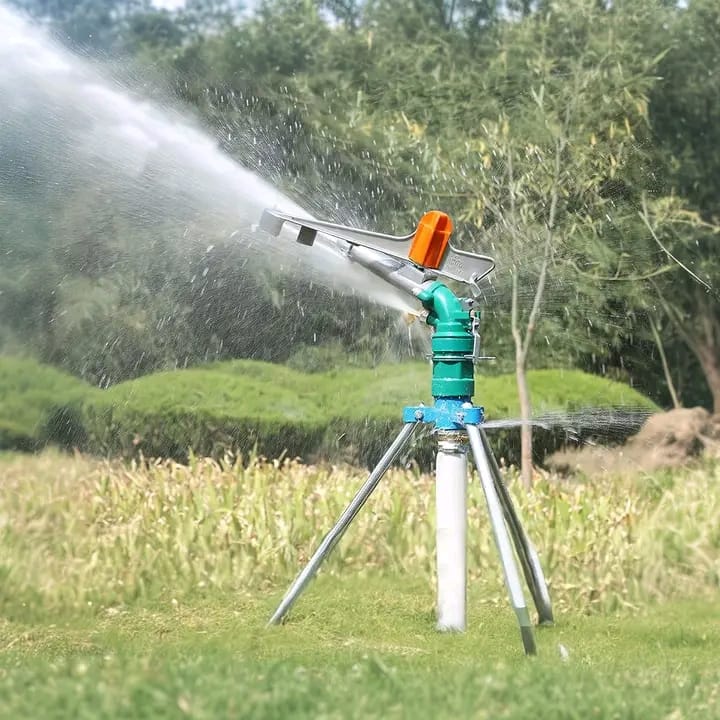
Faulu Irrigation LTD is a supplier of quality sprinklers and rain gun sprinklers in Kenya. We have impact sprinklers, pop-up sprinklers, plastic micro sprinklers, and rain gun sprinklers. Our sprinklers are available from as low as KES 250 for small micro sprinklers to KES 38,000 for big rain guns.
If you need sprinklers and accessories, Faulu Irrigation LTD is here.
Call
0717120401
This comprehensive guide explores everything required to select, install, and maintain high-performance irrigation sprinklers.
What are Sprinklers?
Sprinklers are irrigation devices designed to water plants from an overhead manner. They deliver dispersed sprays of water released in high pressure through nozzles.
Irrigation sprinklers have become an essential solution for farms, nurseries, greenhouses, sports fields, orchards, and lawns. that require uniform water distribution and dependable long-term performance.
Why Irrigate with Sprinklers?
- Reduce water wastage
- Deliver uniform irrigation coverage
- Support multiple crop types
- Minimize soil erosion
- Reduces labour requirements
- Operate efficiently across uneven terrain
From compact
greenhouse sprinklers to large-scale agricultural impact sprinklers, these systems provide flexible irrigation solutions for every farming environment.
Types of Irrigation Sprinklers
Selecting the correct
sprinkler system enhances irrigation efficiency, crop yield, and operational sustainability.
Impact Sprinklers
Impact sprinklers are highly durable irrigation devices commonly used in agriculture and landscaping. They rotate through the force of water pressure striking a rotating arm.
Advantages
- Long spraying distance
- Suitable for large agricultural fields
- Excellent durability in harsh environments
- Uniform water distribution
- Effective under windy conditions
Common Uses
- Field crops
- Orchards
- Pasture irrigation
- Large lawns
- Commercial farms
Rotary Sprinklers
Rotary sprinklers distribute water slowly and evenly through rotating streams.
Benefits
- Reduced runoff
- Improved water absorption
- Better water conservation
- Consistent pressure performance
Ideal Uses
- Turf irrigation
- Sports grounds
- Residential landscaping
Pop-Up Sprinklers
Pop-up sprinklers remain underground when inactive and rise during irrigation cycles.
Advantages
- Clean landscape appearance
- Reduced physical damage
- Automated irrigation
- Wide area irrigation coverage
Best Applications
- Residential gardens
- Parks
- Golf courses
- Decorative landscapes
Micro Sprinklers
Micro sprinklers are designed for precision irrigation with low water flow rates.
Key Features
- Low-pressure operation
- Water-saving performance
- Precise root-zone irrigation
- Reduced evaporation losses
Common Agricultural Uses
- Nurseries
- Greenhouses
- Vegetable cultivation
- Fruit orchards
Rain Gun Sprinklers
Rain gun sprinklers are high-capacity irrigation systems capable of covering extensive agricultural areas.
Benefits
- Extremely large coverage radius
- High-volume irrigation
- Suitable for tall crops
- Fast irrigation cycles
Applications
- Sugarcane fields
- Maize cultivation
- Large commercial farms
- Dust suppression systems
Components of a Sprinkler Irrigation System
A complete irrigation
sprinkler system includes several interconnected components that ensure efficient water delivery.
Water Source
You can source water from borehole, river, storage tank, reservoir or municipal connection.
Pumping Unit
Pumps generate the pressure required for sprinkler operation.
Common Pump Types
| Pump Type |
Best Application |
| Centrifugal Pumps |
Surface water systems |
| Submersible Pumps |
Borewell irrigation |
| Booster Pumps |
Pressure enhancement |
Mainline and Submain Pipes
HDPE main and submain pipes to transport water from the source to the sprinkler network.
Control Valves
Valves regulate water flow and pressure throughout the irrigation system. You can use ball valves or solenoid valves depending on the sprinkler type.
Sprinkler Heads
Sprinkler heads determine spray pattern, radius, and discharge volume.
Factors Affecting Choice of Sprinkler to Use
- Crop type
- Soil condition
- Water pressure
- Wind speed
- Coverage requirements
Advantages of Sprinkler Irrigation Systems
Modern sprinkler irrigation systems provide significant agricultural and economic benefits.
Water Conservation
Efficient sprinklers minimize water loss caused by runoff, overwatering, and uneven distribution.
Uniform Water Distribution
Uniform irrigation ensures crops receive equal moisture levels across the field.
Reduced Labor Requirements
Automated sprinkler systems significantly decrease manual irrigation activities.
Adaptability to Different Terrains
Sprinkler irrigation functions effectively across slopy and uneven landscapes.
How to Choose the Best Irrigation Sprinklers
Choosing the correct irrigation sprinkler system depends on several technical and environmental factors.
Crop Type
Different crops require specific irrigation patterns.
| Crop Type |
Recommended Sprinkler |
| Vegetables |
Micro sprinklers |
| Wheat |
Impact sprinklers |
| Orchards |
Micro or rotary sprinklers |
| Lawns |
Pop-up sprinklers |
Water Pressure Requirements
Sprinklers operate efficiently within designated pressure ranges.
Low Pressure Systems
Suitable for:
- Drip-compatible setups
- Greenhouses
- Small farms
High Pressure Systems
Recommended for:
- Rain guns
- Large-scale agriculture
- Long-distance water projection
Soil Characteristics
Soil texture influences water absorption rates.
| Soil Type |
Irrigation Recommendation |
| Sandy Soil |
Frequent low-volume irrigation |
| Clay Soil |
Slower sprinkler discharge |
| Loamy Soil |
Moderate application rates |
Installation of Sprinkler Irrigation Systems
Correct installation ensures long-term irrigation efficiency and reduced maintenance costs.
Site Survey and Planning
The planning stage includes:
- Land measurement
- Water source evaluation
- Pressure analysis
- Crop requirement assessment
System Design Layout
A proper layout prevents overlapping inefficiencies and dry zones.
Pipe Installation
Pipelines should be:
- Properly aligned
- Pressure tested
- Securely connected
- Protected from leakage
Sprinkler Placement
Correct spacing ensures full irrigation coverage.
Key Considerations
- Spray radius
- Wind conditions
- Pressure consistency
- Crop canopy height
Maintenance Tips for Irrigation Sprinklers
Regular maintenance extends sprinkler lifespan and ensures efficient operation.
Clean Nozzles Frequently
Blocked nozzles reduce water uniformity and irrigation efficiency.
Recommended Cleaning Schedule
- Weekly for greenhouse systems
- Monthly for field sprinklers
Inspect for Leakage
Leaks increase water loss and reduce system pressure.
Inspection Areas
- Pipe joints
- Valve connections
- Sprinkler risers
- Pump fittings
Monitor Water Pressure
Improper pressure affects sprinkler performance.
| Pressure Issue |
Result |
| Low Pressure |
Reduced coverage |
| Excessive Pressure |
Mist formation and water loss |
Smart Irrigation Technologies
Advanced irrigation technologies are transforming modern agriculture.
Automated Irrigation Controllers
Smart controllers optimize watering schedules using:
- Weather data
- Soil moisture sensors
- Crop evapotranspiration rates
Solar-Powered Irrigation Systems
Solar-powered pumps and sprinkler systems reduce operational energy costs while supporting sustainable farming.
Advantages
- Lower electricity expenses
- Eco-friendly operation
- Reliable rural irrigation support
Common Problems in Sprinkler Irrigation Systems
Understanding common irrigation issues helps prevent productivity losses.
Uneven Water Distribution
Causes
- Incorrect sprinkler spacing
- Nozzle clogging
- Pressure imbalance
Solutions
- Recalibrate layout
- Replace damaged nozzles
- Install pressure regulators
Excessive Runoff
Causes
- High discharge rates
- Poor soil infiltration
- Sloped terrain
Solutions
- Reduce application rates
- Use rotary nozzles
- Irrigate in cycles
Sprinkler Head Damage
Common Reasons
- Machinery impact
- UV degradation
- Water contamination
Prevention
- Use durable materials
- Perform routine inspections
- Install protective barriers
Best Practices for Efficient Irrigation
Efficient irrigation management improves both crop yield and resource sustainability.
Irrigate During Cooler Hours
Early morning and evening irrigation reduce evaporation losses.
Match Sprinklers to Crop Requirements
Using specialized sprinklers improves moisture consistency and plant health.
Maintain Proper System Pressure
Pressure regulation ensures maximum sprinkler efficiency and water uniformity.